

DEPARTMENT OF HUMANITIES
The Department of Humanities has been recently established at the School of Social Sciences & Humanities (S3H). It is a very diverse department which is home to English, Islamic Studies & Pakistan Studies, History and Cultural Studies faculty. Our faculty is a community of dedicated scholars and teachers whose research expands the boundaries of our knowledge and imagination, and whose teaching prepares students for wide-ranging careers and lifelong learning.
We begin from the fundamental conviction that humanities are a critical component of liberal arts education. In an increasingly interconnected and fast-changing world, our students need a grasp of what it means to understand other cultures as well as their own, and they need the critical and interdisciplinary skills that the Humanities contribute as part of a liberal arts education. Universities have become increasingly identified in the public mind with mere vocational training, but a supple education in the arts and humanities is a good investment in the modern environment. Most of our students will have had not just two or three different jobs by the time they retire, but two or three different careers, and the transferable skills of humanistic studies—flexibility, adaptability, critical analysis, clear oral and written communication— are solid preparation for the uncertain future.
As a field, the humanities remain out of favor in Pakistan, both in the public imagination and in academia, but evidence from the last three decades indicates that, despite the decline in status, interest in the humanities has been rising. With a boom in the number of PhDs, foreign-educated academics, and authors writing about Pakistan from home and abroad, the humanities have been enriched by cutting-edge research and innovative literary works. The main areas that this work has helped address are the ethnic imbalance in society, the disparity of access to power between the genders, the state’s absence in its duties toward minorities, and Western Islamophobic representations of Pakistan. These trends show that the state of the humanities in Pakistan is complicated. While the overall trend is one of decline, institutional and market demands have ensured that the humanities cannot be altogether ignored. The more polarized society becomes, the greater the role that the humanities must play. Yet, no government seems cognizant of the part that the humanities can play in the reformation, reconfiguration, and reorientation of Pakistani society. No government has presented a vision to channel the humanities as a social project. The relative growth of the humanities across other noteworthy alma-maters in the country indicates, however, that there is space for this discipline to grow and find greater acceptance in Pakistan.
It is in this context that we proposed the launch of a BS program in Liberal Arts and Humanities at S3H. A liberal arts education offers an expansive intellectual grounding in all kinds of humanistic inquiry. By exploring issues, ideas and methods across the humanities and the arts, and the natural and social sciences, our students will learn to read critically, write cogently and think broadly. These skills will elevate their conversations in the classroom and strengthen social and cultural analysis; they will cultivate the tools necessary to allow them to navigate the world’s most complex issues. The proposed program offers a combination of courses in Liberal Arts and Humanities.
Employment opportunities of Humanities graduates are projected to grow at a rapid pace over the next ten years worldwide. The demand of Research and Development in this field is also high. International /Local industries that are involved in job placement of Liberal arts students after graduation include academia, policymaking, politics, media, corporate sector, third sector, government, international organizations: UNDP, British Council, UNFPA, USAID, ICA, and Swiss Aid as well as private consultancy.
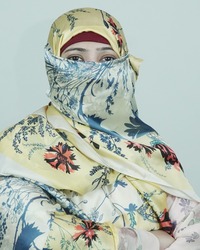
Head of Department Message
Ms. Afshan Hanif
Welcome to the Department of Humanities at the School of Social Sciences & Humanities(S3H)- the leading, most dynamic and variegated school at NUST. In an age where ‘avant-gardism’ is on the rise, S3H is leading many young individuals into their respective careers forthwith their high school; we focus our first-year undergraduate studies on a common core curriculum that provides our students with an extensive humanities education across an array of disciplines. The beauty and power of humanities are featured through every part of the education we provide and the scholarly and creative activities our faculty produce. Our trail-blazing work at the intersection of arts and technology, and our credence that the values of the humanities need to be built into the DNA of social sciences show why the future starts here at S3H. The humanities department did not emerge Athena-like, in its prime, from our imagination or the powers of invention of the founding faculty, students, and staff. It has been brought about through other experiments and exertions including the earlier creation of S3H in 2013. When S3H turned 11, we began to plan for a liberal arts and humanities undergraduate program. By March 2024, in the middle of the eleventh year, with four different cohorts of students enrolled and plans for our first liberal arts class beginning to coalesce in Fall 2025, we had a better idea of what our students look for, what it is that will attract them to the humanities department, and what we hope they will learn. The everyday advances, honest peccadilloes, small restorations and creative laps have made this work as gratifying as it has been exigent on a personal level. Consequently upon, the “Liberal Arts & Humanities” undergraduate program came into being with its four theoretical underpinnings/corollaries: Philosophy; History; Culture & English Literature. Please explore our website to learn more about our program, courses, and the people who make them possible. Education, as Socrates envisioned rests on four profound stanchions: dialogic interaction; critical thinking; admission of ignorance and active learning. As humanities scholars, we pull out all the stops to interpose new solutions, narratives, and knowledge in response to societal needs and transmuting times. Our agglomeration of courses is interdisciplinary in nature. We pledge to furtherance our students into ingenious and thorough learners with a humanistic delicacy and worldwide foresight. We embolden them to expand their intellectual purview, acquire new languages and prospects, and gain new life capabilities. One such capability that we want to inculcate amongst our students is to be able to realize path dependency, on the one hand, and become a path breaker for parity, diversity and insertion into society, on the other hand. We revel in being a student-centered faculty, engrossed in ascertaining that your academic journey is rich, profound and noteworthy. Felicitations as you go aboard on your studies and thank you for allowing us to be part of your academic journey. As we know, students who have chosen Humanities majors have chosen the very best path to fulfilment, leadership, and a lifetime of engagement with the fundamental questions of our experience on this planet. I look forward to seeing very soon powerful student energy exploring history, the stories we tell, our ways of communicating, our deep thoughts and ways of knowing. Humanities students are our future leaders and chroniclers and knowledge-makers. We trust in them and will provide them with the tools they will need to succeed.
Read More